
When planning and focus don't come like they used to
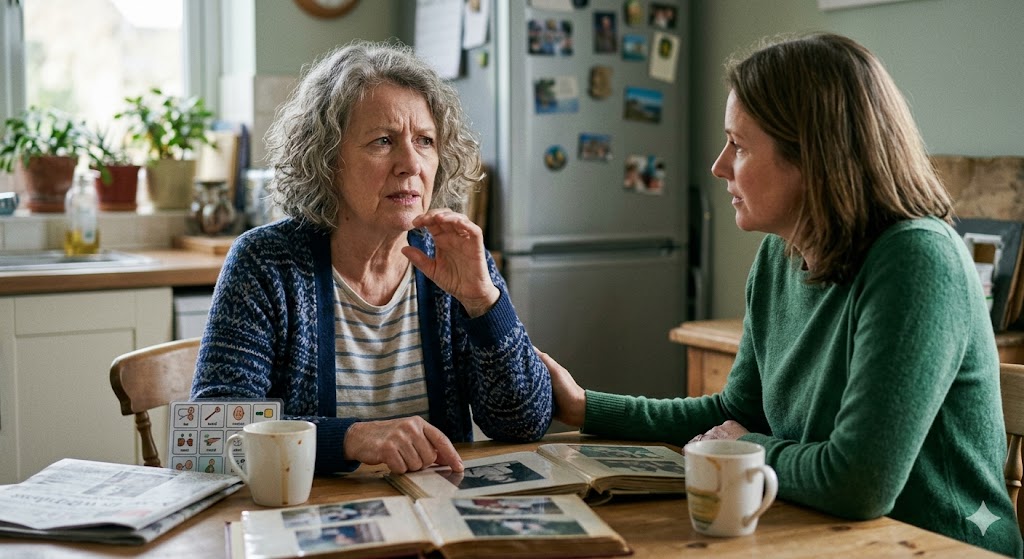
After a stroke, a brain injury, a concussion, or long COVID, the brain's management skills can slip: holding a plan in mind, staying on track, starting and finishing, keeping up in conversation. I help you rebuild them with practical strategies you practice in your real day, with the people closest to you coached alongside.
Can a speech therapist help with executive function?
Yes, often more than people expect. Attention, memory, planning, and word-finding are part of cognitive-communication, which is exactly what a speech-language pathologist treats. After a stroke, a brain injury, a concussion, or a virus, we build practical strategies you can use at home, at work, and in conversation.
Built Around Your Real Day
We work with the routines, calendars, and tasks you actually have, at home and at work.
No Travel, Less Fatigue
Secure video from home saves the energy a commute costs, which matters when fatigue is part of the picture.
Family Coached Alongside
The people closest to you learn how to support the strategies, so practice keeps happening between sessions.
What is executive functioning coaching for adults?
Executive functioning coaching for adults builds practical systems for the brain's management skills: attention, working memory, planning, task initiation, and follow-through. For adults whose thinking changed after illness or injury, it turns "just try harder" into concrete strategies that fit real life. As a speech-language pathologist, I focus on the communication side too, so word-finding, organizing what you want to say, and staying on track in high-stakes conversations all get easier.
Why it works: neuroplasticity
Your brain keeps rewiring. Neuroplasticity means the pathways behind focus, recall, and mental stamina can be strengthened with the right, repeated practice, at any age. The point isn't to power through the fog, it's to train those systems back up, deliberately. Read the science behind it.
How often we meet
Because progress tracks with consistent practice, many clients meet more than once a week, in short, energy-friendly sessions rather than one big appointment. We set the cadence together after a free 20-minute call, around your goals and your energy, with no long-term lock-in.
Not sure what's behind the fog?
A 2-minute check helps you sort out post-viral fog, concussion effects, or overload, and what tends to help.
Cognitive-Communication Support After Illness or Injury
I work with adults whose focus, word-finding, and mental stamina have changed after a stroke, a traumatic brain injury, a concussion, or long COVID. Executive functions are the brain skills you use to organize, plan, focus, and keep track of time. When they shift, high-stakes work and ordinary tasks alike can feel overwhelming, and I understand how much is riding on getting them back.
Together we build practical skills for attention, organization, and self-regulation, using strategies you practice in your real daily life. My aim is to help you regain confidence and independence, and to get back to the work, relationships, and routines that matter to you.
- Cognitive-communication rehab after stroke, TBI, and concussion
- Support for long-COVID brain fog
- Strategies for attention, memory, and organization
Enhance Your Executive Skills
Focused Attention
Practical techniques to improve concentration and sustained attention for work and daily tasks.
- Attention training exercises
- Distraction management strategies
- Mindfulness and focus techniques
- Environmental modification support
Organizational Skills
Strategies to keep daily tasks and spaces orderly, reducing overwhelm and increasing efficiency.
- Task prioritization methods
- Workspace organization systems
- Digital organization tools
- Daily routine development
Time Management
Practical methods to enhance scheduling and meet deadlines with confidence and reduced stress.
- Schedule planning techniques
- Deadline management strategies
- Time estimation skills
- Procrastination intervention
Conditions I Support
Stroke & Brain Injury
Cognitive-communication rehab after stroke, traumatic brain injury, and concussion.
Long-COVID Brain Fog
Support for attention, memory, and word-finding changes after long COVID.
Concussion
Support for focus, processing speed, and word-finding that linger after a concussion.
Mental Fatigue
Energy-aware strategies when thinking work drains you faster than it used to.
How We Work Together
Evaluation
We start with a careful look at your current thinking and communication skills, your challenges, and the demands of your daily life. This includes standardized measures and real-world task analysis so I understand what you need most.
Strategy Development
From there, we build strategies that target your specific challenges and fit your life, your goals, and how you like to work. We focus on the tasks that matter to you at home and at work.
Skill Building & Practice
In regular sessions, we practice and refine these skills in real-world contexts. You'll learn practical methods for attention, organization, and time management that you can use right away.
Ongoing Support & Carryover
I keep supporting you as you use these strategies in daily life. Family members and the people around you can be coached too, so the skills carry into the settings where they matter.
Ready to rebuild your focus and communication?
Take the first step toward better attention, organization, and daily communication.
Virtual across Tennessee, Kentucky & North Carolina. marina@affinitytherapytn.com
Frequently Asked Questions
Why Marina
Hands-on experience, put to work for your family
Before I became a speech-language pathologist, I first studied music therapy, then worked as a registered behavior technician and as an SLP assistant in schools, with graduate training in skilled-nursing and outpatient rehab. For you, that means a clinician who has done the day-to-day, hands-on side of the work herself, and who builds plans you can actually carry out at home, between sessions, in real life.
Practice that feels natural
Music therapy is where I started, so rhythm, routine, and play shape the everyday practice we build together.
Plans you can actually do
Years as a behavior technician and SLP assistant taught me what works in a real day, not just on paper.
Help where you are
Secure video, anywhere in Tennessee, Kentucky, and North Carolina. No commute, no waiting room.
Insights from Affinity Therapy