
Life with aphasia:
regaining language and connection after stroke or brain injury
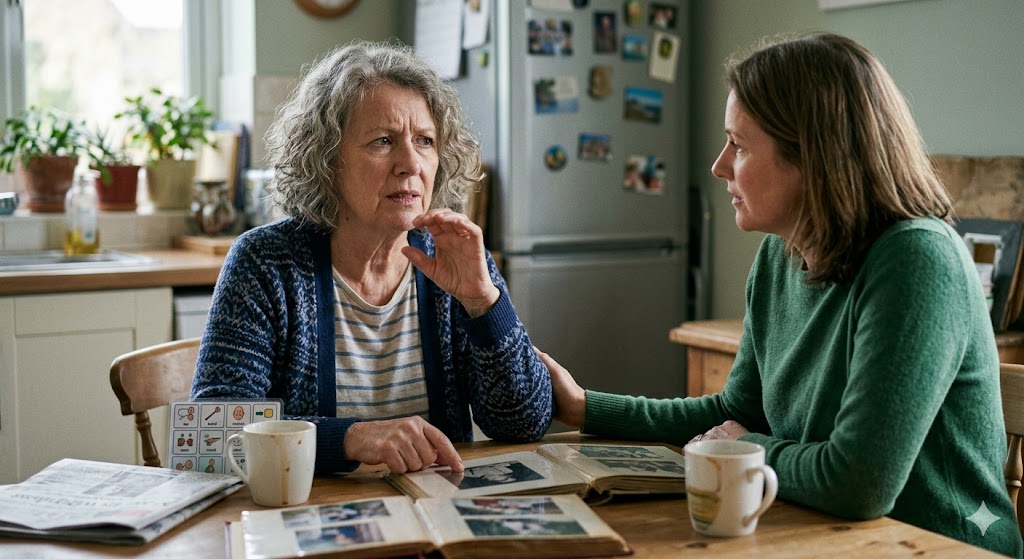
If a stroke or brain injury has made words harder to find, harder to say, or harder to understand, you're still you. Your thoughts and who you are haven't gone anywhere. What's changed is the bridge between thought and word, and that bridge can be rebuilt. I help adults with aphasia get their words back, feel steadier in conversation, and stay connected to the people who matter most.
Individualized Assessment
Methods That Work
Compassionate Care
Goal-Oriented Treatment
Marina's Approach to Aphasia Treatment
Aphasia was the area I kept coming back to in grad school. It felt like the most human of the communication disorders. The person is fully there. Their thoughts, their humor, their personality all intact. It's just the bridge between thought and word that's been disrupted. And that bridge can be rebuilt. That possibility is what drew me in, and it's what keeps me here.
During my graduate studies, I developed a strong interest in working with adults experiencing neurocognitive communication challenges. I was particularly drawn to aphasia, because its complexity and the potential for meaningful improvement really stood out to me.
Through my practicum and internship experiences in skilled nursing facilities and outpatient rehab centers, I gained valuable hands-on experience supporting adults recovering from strokes, brain injuries, and other neurological conditions. I strive to provide thoughtful, person-centered care in a supportive environment, helping clients work toward clearer communication and improved quality of life.
- Specialized training in neurocognitive communication disorders
- Hands-on experience in skilled nursing and outpatient settings
- Person-centered, compassionate therapy approach
- CCC-SLP Certified | Licensed in TN, KY, CA & NC
What to Expect
Initial Consultation & Assessment
We begin with a full evaluation to understand your communication challenges, medical history, and personal goals. This includes standardized assessments and informal observation to build a clear picture of where your language is now.
A Plan Built Around You
Based on your assessment, we build a therapy plan around your specific needs and the goals that matter to you, from ordering coffee to holding a full conversation again.
Regular Therapy Sessions
Through consistent, supportive therapy sessions, we'll work together to rebuild your communication skills. Each session is designed to be engaging and meaningful, focusing on practical communication needs and gradual skill improvement.
Progress Monitoring & Family Support
We continuously track your progress and adjust treatment as needed. Family members and caregivers receive education and strategies to support your communication at home, ensuring progress continues beyond therapy sessions.
Understanding Aphasia
Aphasia is a language disorder that affects how you communicate. It can touch speaking, understanding, reading, and writing. It usually shows up after a stroke or brain injury. The encouraging part is that with the right therapy, real improvement is possible, and it can keep coming for years. Your brain's language networks can reorganize with repeated practice, which is why gains continue well past the point many people are told to expect.
Common Challenges
- Difficulty finding words
- Trouble understanding speech
- Reading comprehension issues
- Writing difficulties
Recovery Potential
- Significant improvement possible
- Recovery continues for years
- Quality of life enhancement
- Renewed independence
Word-finding strategies you can try
Word-finding difficulty, or anomia, is one of the most common and frustrating parts of aphasia. These strategies don't replace therapy, and they can ease everyday conversations while you rebuild word retrieval:
- Describe it: talk around the word (what it's for, where you'd find it) until it comes or your partner understands.
- Cue yourself with the first sound, or with a gesture or the shape of the word.
- Name the category first (a fruit, a tool, a place) to help trigger the word.
- Keep a short list of the names and words you use most, and rehearse them.
- Give it time: pause without pressure, because rushing makes retrieval harder.
- Let your communication partner offer a choice, like tea or coffee, rather than quiz you.
In therapy we build these into structured naming practice with semantic and phonological cueing, so word retrieval gets faster and more reliable over time. Aphasia often occurs alongside apraxia of speech in adults; if getting the words out feels physically effortful, that page covers motor-speech recovery.
Serving aphasia therapy in Tennessee, plus Kentucky, California, and North Carolina, all by secure video.
Frequently Asked Questions
Why a specialist
Adult neurologic communication recovery is my specialty
After a stroke or brain injury, the person is still fully there. Their thoughts, their humor, their personality are all intact. What's changed is the bridge between thought and word, and that bridge can be rebuilt. Helping adults do that, after aphasia, brain injury, and stroke, is the work I trained for in skilled-nursing and outpatient rehab, and the work I care most about.
Credentialed and trained for it
M.S., CCC-SLP, licensed in four states, with clinical training in skilled-nursing and outpatient rehab supporting adults after stroke and brain injury.
Methods that fit you
Approaches with a track record, chosen for your goals and the life you want back.
Virtual across four states
Telehealth in Tennessee, Kentucky, California, and North Carolina, from home.