5 Strategies to Support Your Child’s Communication by a Speech Pathologist
5 Strategies to Support Your Child’s Communication by a Speech Pathologist
As a parent, you are your child’s most important communication partner. You don’t need to be a therapist to make a difference — these five strategies, recommended by Speech-Language Pathologists, can be woven into everyday moments at home.
1. Create Language Opportunities
Instead of doing everything for your child right away, set up small moments where they are encouraged to communicate. Try handing them a snack container that’s still sealed, or a toy that needs your help. These little challenges give your child a natural reason to ask for help, make a request, or use a word or gesture. It’s not about frustrating them — it’s about giving them more opportunities to communicate.
2. Follow Your Child’s Lead
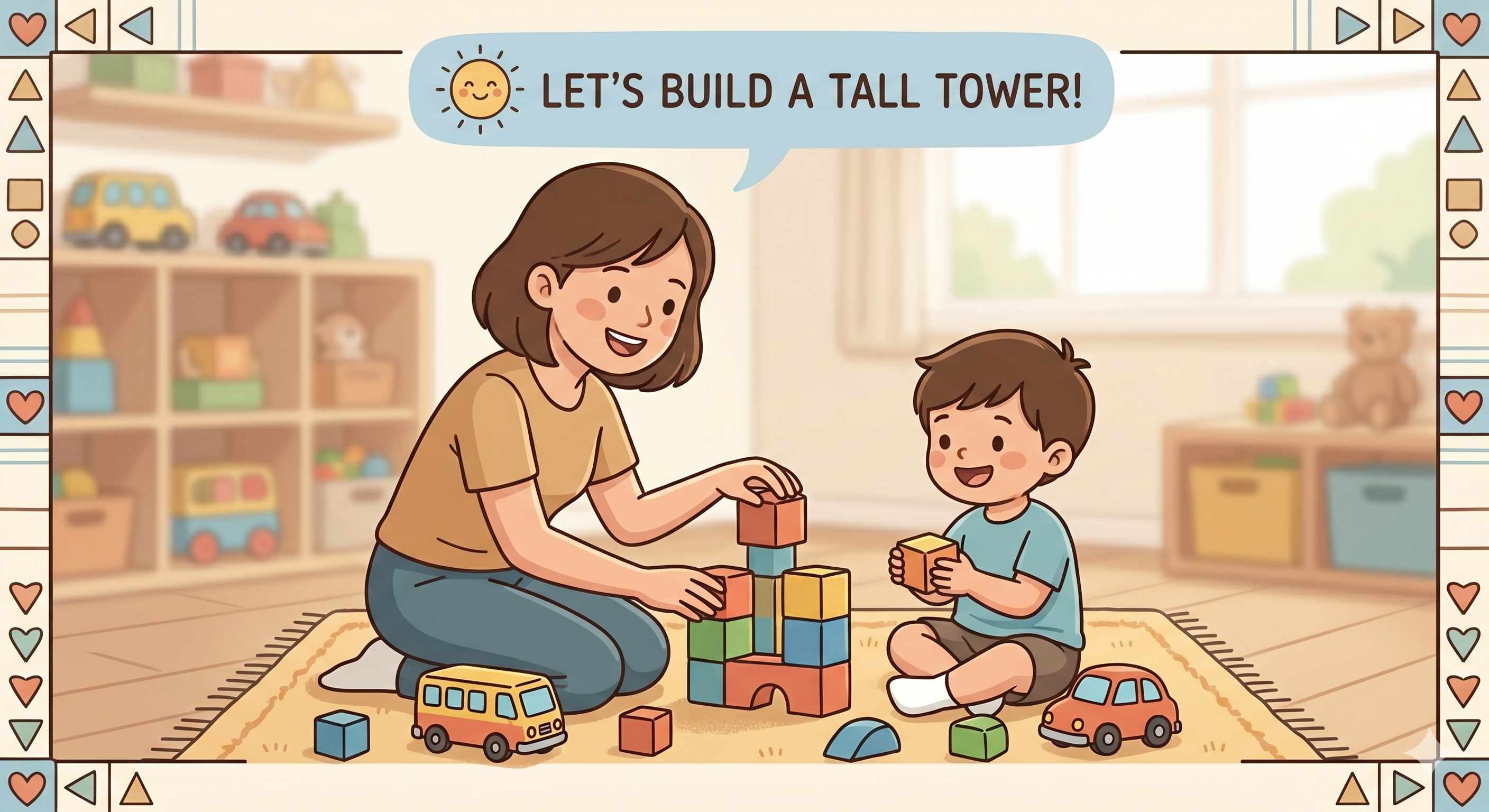
Children learn best when they’re excited about what they’re doing. Rather than directing playtime, join in on their terms. If they’re obsessed with cars, talk about cars. If they’re sorting blocks, sort alongside them. When you follow their lead, they become more motivated and more open to learning new words in the context of something they already enjoy.
3. Give It Wait Time
This one is harder than it sounds. After you model a word, sign, or gesture, resist the urge to fill the silence. Count silently to about 10 and give your child a real chance to respond. Children with communication delays often need more processing time than we expect. That pause isn’t awkward — it’s an invitation. It tells your child you believe they have something to communicate, and you’re patiently waiting for them.
4. Expand What They Say
When your child uses a word or short phrase, build on it just slightly. If they say “ball,” you might say “big ball” or “throw ball.” If they say “go,” try “doggy go!” This technique — called expansion — models slightly more complex language without putting pressure on your child to repeat it immediately. Over time, it naturally builds vocabulary and longer phrases.
5. Reduce Demands
It’s tempting to pepper kids with questions to get them talking — “What’s that? What color is it? What does it do?” But too many questions can actually backfire, creating pressure that causes children to pull back and speak less. Instead, try making comments rather than asking questions. Swap “What is that?” for “Oh, a dog! The dog is running.” Comments keep the interaction warm and low-pressure while still modeling great language. This change can take some time to get used to, but you will get the hang of it!
Affinity Therapy offers individualized parent coaching teaching more strategies like these! Don’t hesitate to reach out with any questions!

Marina Coakley, M.S., CCC-SLP
I'm a licensed speech-language pathologist (CCC-SLP). I help adults rebuild communication after stroke, brain injury, and aphasia, working with them and the families beside them across Tennessee, Kentucky, California, and North Carolina.
Learn moreReady to Work with Marina?
Schedule a free consultation to discuss how speech therapy can help your family.