Helping your child find their words —
early communication support for families
The early years are when language takes root. When a child is slower to talk — or communicates differently than expected — the window for support is wide open. Affinity Therapy works alongside families to understand what your child is ready for and how to build communication into the moments you already share together.
A Different Approach
Our focus is on empowering you—because you're with your child every day, in every moment that matters. When parents feel confident, children thrive.
Connection First
Connection regulates the nervous system. A regulated child is ready to learn. Learning fuels communication.
Everyday Routines
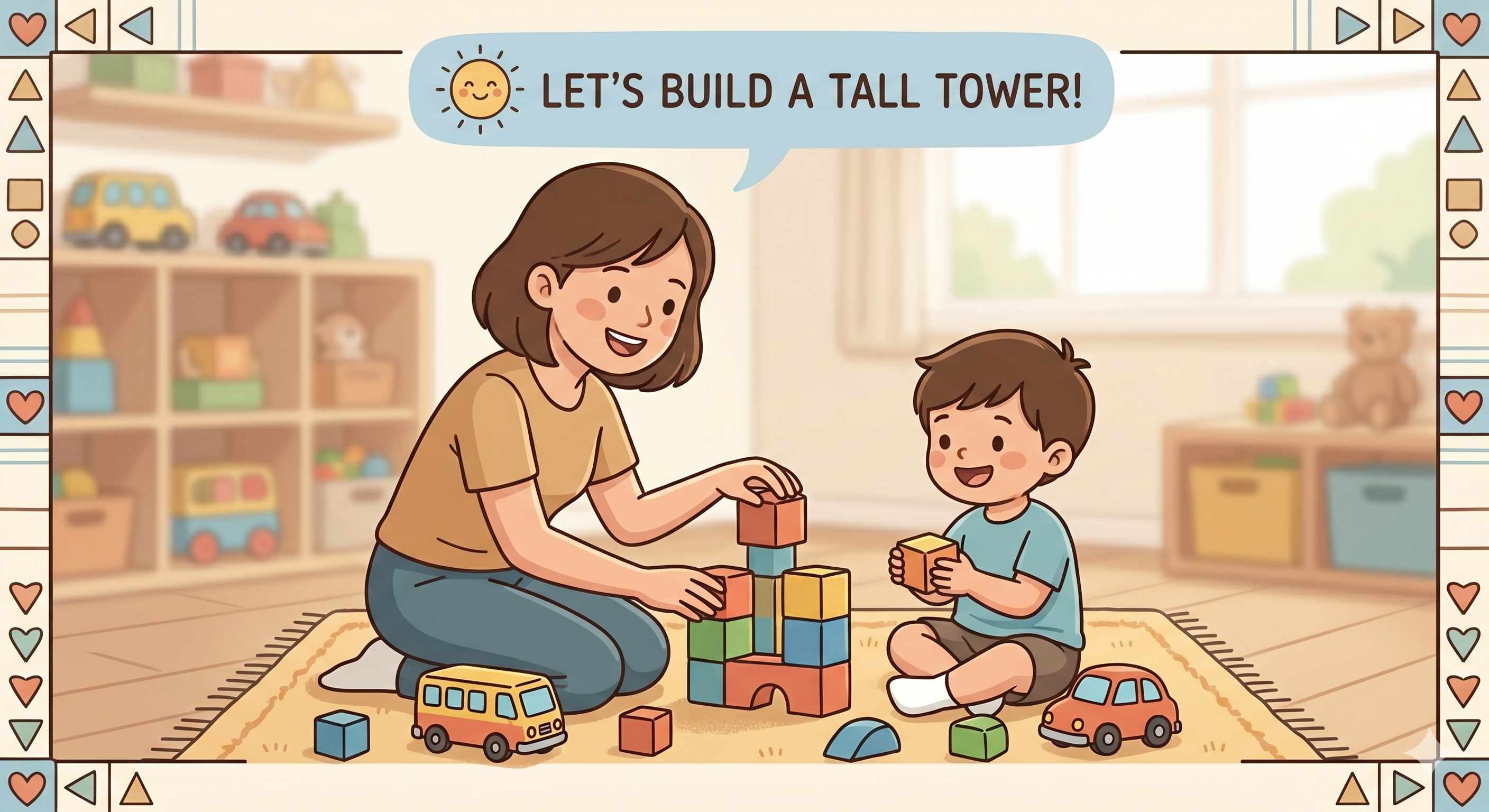
Real communication growth happens during meals, bath time, play, and bedtime—in all the moments you share together.
Parent Partnership
You're not an observer—you're the primary partner. I coach you, and you become your child's best communication support.
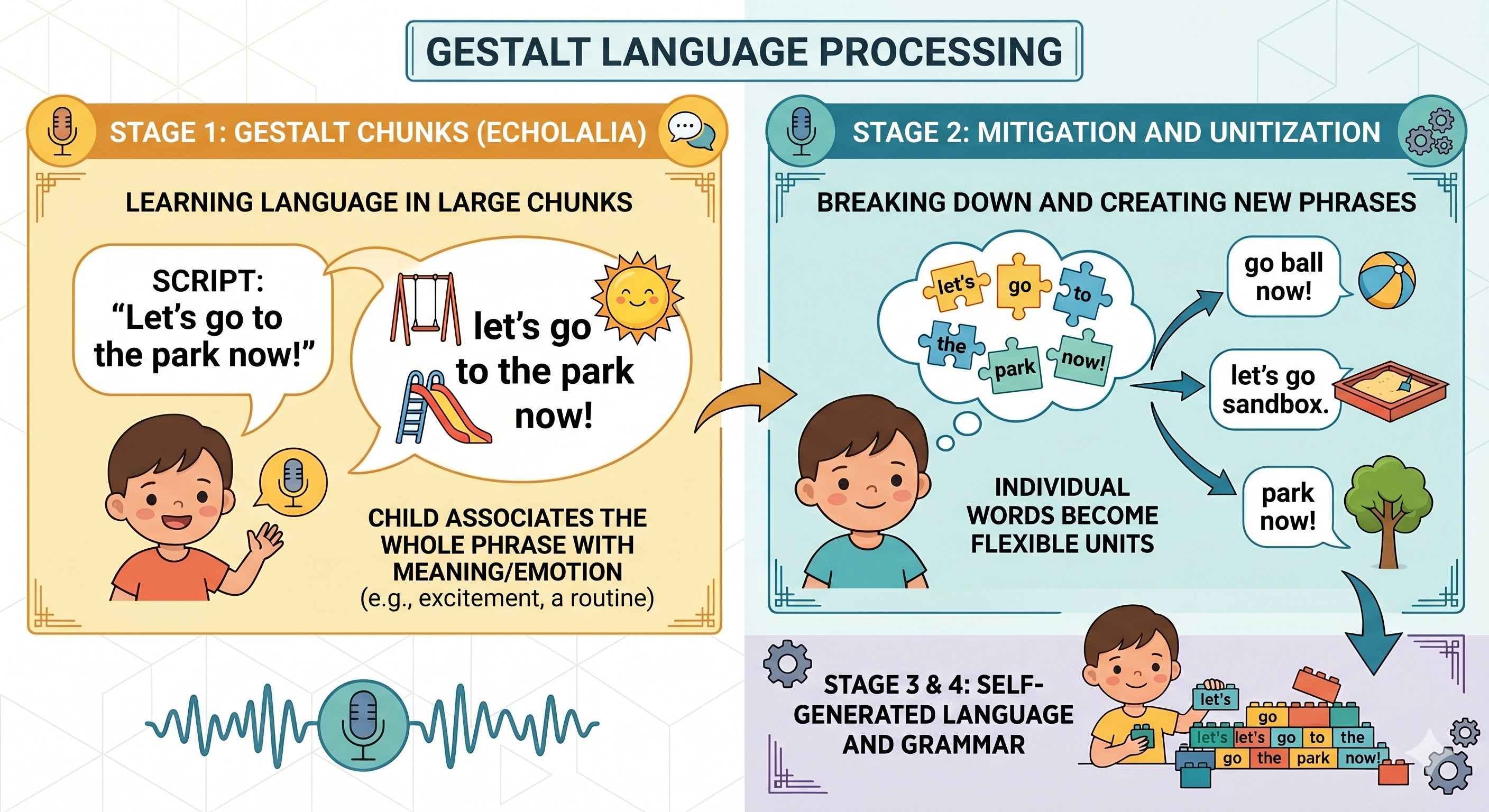
A note on gestalt language development: Many children with autism develop language through gestalts — repeating meaningful chunks of language before gradually analyzing and recombining them into novel phrases. Affinity Therapy supports both natural language development and gestalt language processing (GLP), meeting each child on the path that's actually theirs.
Who This Is For
Children
- Late talkers (18–36 months) who aren't yet using words as expected
- Toddlers and young children with early autism profiles or concerns
- Children whose understanding seems to exceed their spoken language
- Children who may benefit from broader definitions of communication
Parents & Caregivers
- Motivated and engaged in supporting their child's development
- Open to learning coaching approaches and new strategies
- Willing to try strategies at home and during daily routines
- Seeking confidence and clarity in supporting their child
How It Works
Coaching-first support with selective direct therapy—delivered where your child learns best.
Parent Coaching
The core of our approach. I work directly with you to build your confidence and skills as your child's communication partner.
- Learn to recognize communication attempts
- Strategies for everyday routines
- Understanding regulation and connection
- Video review and feedback
Selective Direct Therapy
When appropriate, I work directly with your child—but always with the goal of modeling strategies for you to use.
- Play-based, child-led interaction
- Modeling strategies for parents
- Focus on regulation and connection
- Assessment and progress monitoring
What You'll Learn
Recognize Your Child's Communication
Learn to see and respond to communication attempts you might be missing—the gestures, sounds, eye contact, and behaviors that are your child's way of connecting.
Build Confidence as a Communication Partner
Gain the confidence to respond effectively and support communication attempts. The first outcome is parent confidence—which leads to everything else.
Understand Connection and Regulation
Discover how your child's emotional state impacts learning, and how your presence and connection create the foundation for communication growth.
Expand Your Definition of Communication
Communication is broader than spoken words. Learn to support and honor all meaningful communication—including gestures, signs, and alternative methods.
Start Supporting Communication Today
You don't need to wait to support your child's communication. Let's talk about what you can do at home, starting now.
"Connection comes before words."
Serving Tennessee & Kentucky — marina@affinitytherapytn.com
Frequently Asked Questions
Why a specialist
Adult neurologic communication recovery is my specialty
After a stroke or brain injury, the person is still fully there. Their thoughts, their humor, their personality are all intact. What's changed is the bridge between thought and word, and that bridge can be rebuilt. Helping adults do that, after aphasia, brain injury, and stroke, is the work I trained for in skilled-nursing and outpatient rehab, and the work I care most about.
Credentialed and trained for it
M.S., CCC-SLP, licensed in four states, with clinical training in skilled-nursing and outpatient rehab supporting adults after stroke and brain injury.
Methods that fit you
Approaches with a track record, chosen for your goals and the life you want back.
Virtual across four states
Telehealth in Tennessee, Kentucky, California, and North Carolina, from home.